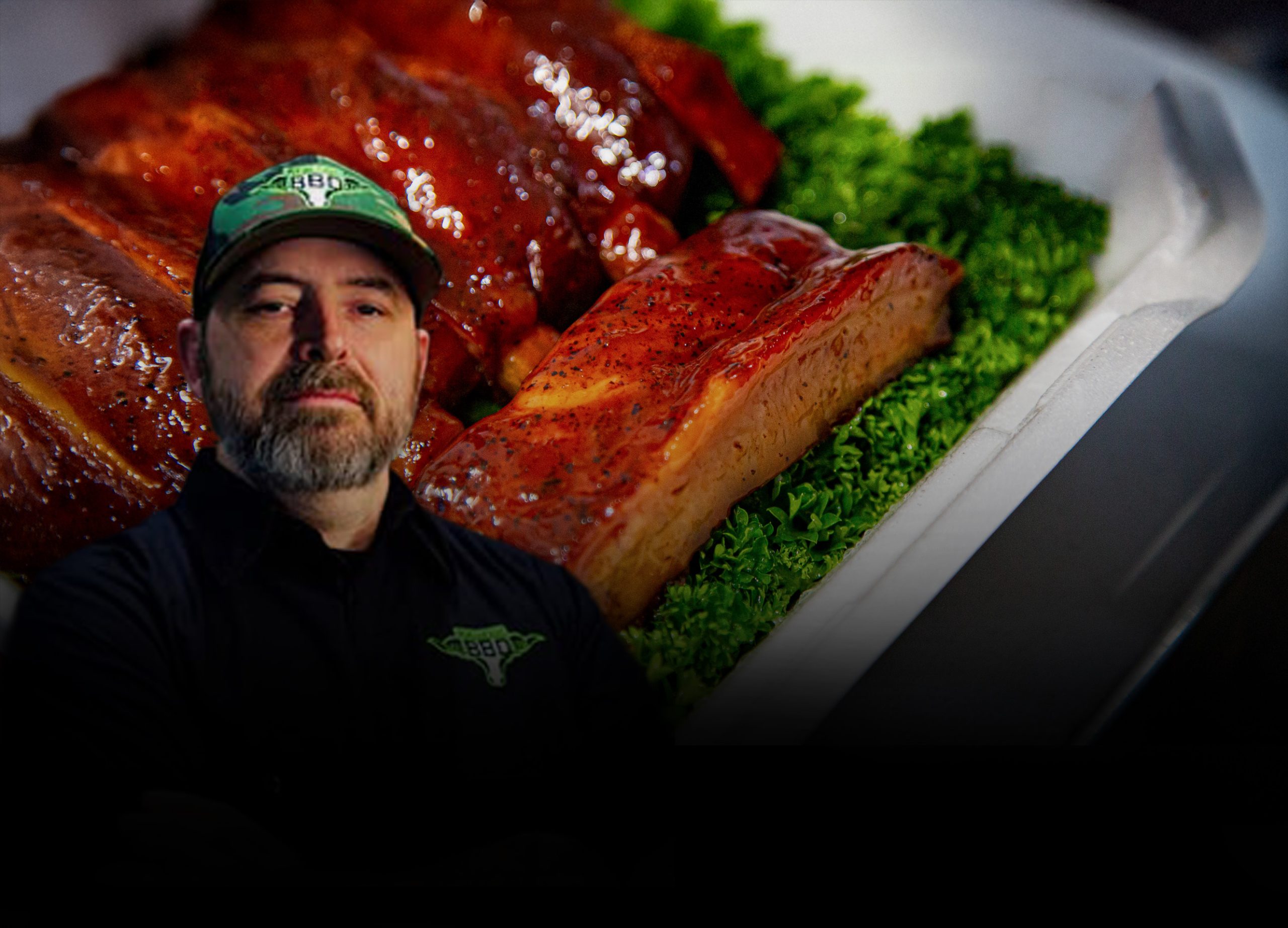
A close copy of our tried-and-true smoking method, we elevated the entire experience by switching to local, grass-fed beef from Stone Ridge Beef. Raised on pasture right here in Lancaster County, this naturally tender Angus beef brings a cleaner, richer depth of flavor to the table. This upgrade will turn your favorite cut into comp-quality BBQ gold!
- Serves 8-10 adults.
Preferred Smoking Fuel
- Longhorn Blend Cookin Pellets
- Hickory logs or chunks
Ingredients
- 1 Stone Ridge Beef packer brisket, about 13 pounds
- Killer Hogs AP Rub
- Hardcore Carnivore Black Rub
- Stone Ridge Premium Beef Tallow
Burnt Ends Ingredients
The Preppin’
- Twelve hours before smoking the brisket, remove the meat from the packaging. Cutting with the grain, trim as much surface fat as possible off the top of the flat, being careful not to carve a divot into the surface of meat. Trim out the fat seam separating the point and the flat until they are two distinct parts of the brisket, but do not completely separate them. Remove all the surface fat from the point. Do not remove any fat on the bottom of the brisket.
- Pat the surface of the brisket with paper towels, then apply a medium coat of AP Rub to the entire brisket, lightly patting it into the meat.
- Wrap the brisket tightly with plastic wrap and return it to the refrigerator.
- One hour before you begin smoking, preheat your smoker to 210°F if using a pellet smoker or 225°F if using a charcoal or wood smoker.
- If using a charcoal smoker, add several chunks of wood to the fire twenty minutes before adding the meat.
- Fifteen minutes before you begin smoking, remove the brisket from the refrigerator and discard the plastic wrap. Apply a medium-heavy coat of Black rub, lightly patting it into the meat. Let the brisket sweat at room temperature for fifteen minutes.
Smoke Show!
- Spray the smoker grate with cooking spray, then put the brisket on the grate, fat side down, with the point turned towards the hottest side of the smoker.
- After four hours of smoking, mist the brisket with water.
- When the internal temperature in the center of the flat reads 160–165°, set the brisket on a layer of unwaxed butcher paper (AKA peach paper). Add 2 heaping tablespoons of Stone Ridge Premium Beef Tallow and wrap it up!
This internal temperature will be reached after about ten hours if smoking at 210° or about eight hours if smoking at 225°. - For easier handling so the meat doesn’t fall apart later, place the wrapped brisket on a pan grate or jerky rack and return it to the smoker. Increase the smoker heat to 250° and continue smoking the brisket for two to three hours longer, until a thermometer probe inserted in the flat meets minimal resistance; typically an internal temperature of 192°–195°. You’re not looking for a hot-knife-through-butter feel; that’s over-cooked!
The Restin’
- Resting the brisket properly at the end of the cook is extremely important, so prepare for that immediately after returning the wrapped brisket to the smoker. Fill a high-quality cooler with hot tap water; if you have an exterior faucet with hot water, a garden hose is the fastest way to do this. Otherwise, it’s bucket brigade time! Close the cooler lid and let the water pre-heat the cooler for an hour. After an hour, dump the water and refill the cooler with hot water once more, again making sure to securely close the lid. Pre-heating the cooler like this will keep the brisket at its optimal resting temperature for hours on end.
- When the brisket reaches the temperature and tenderness feel you’re looking for, remove it from the smoker and put it in a pan. Open the butcher paper wrap and let the brisket vent for five minutes.
- Close the paper again, then wrap the meat tightly in plastic wrap, butcher paper and all. Insert a remote temperature probe into the center of the flat so you can monitor the temperature during the resting period.
- Dump the hot water out of the cooler and arrange a towel in the bottom. Next, set the pan holding the brisket into the cooler. Cover the meat with a second towel or an old sleeping bag, carefully close the cooler lid over the probe cable, and LEAVE THE LID SHUT!
- Let the brisket rest for a minimum of two hours or until it drops to an internal temperature of 155-160°.
The Homestretch
- Remove the brisket from the wrap and separate the point and the flat into two individual pieces by cutting through the remainder of the fat seam. Remove all excess fat from the bottom of the flat, tightly wrap it in foil, and return it to the cooler.
- Finish the burnt ends: Remove any excess seam fat from the point, then cut the point into bite-sized pieces and place them in a foil pan. Pour OP X-1 sauce heavily over the burnt ends and mix them until they are completely covered in sauce. Finally, dust the burnt ends with more of the rub.
- Grill the burnt ends in the pan over direct heat, stirring them frequently, until the sauce is nicely caramelized and sticky, about ten minutes.
- Take the flat from the cooler and slice it across the grain into 1/8–1/4” slices.
- Reserve the choicest slices and burnt ends for the pitmaster (quality control, you know!) and serve the rest to your guests.
- Store any leftovers in a covered container in the refrigerator for up to five days, or in the freezer for up to three months.